Archive

Categories
Meaningful Work

How To Build A Meaningful Culture At Work

Research from the American Psychological Association has shown that workers who perceive their jobs as meaningful report higher job satisfaction, are more engaged, have lower rates of absenteeism and even enjoy better health. And you don’t have to look any further than the younger generation of workers to truly see its importance. To Millennials and Gen Z, meaningful work isn’t just ‘nice to have’, it’s necessary.

Let’s break it down by the numbers, according to a 2025 survey by Deloitte:

  • Gen Zs (89%) and millennials (92%) say a sense of purpose is important to their job satisfaction and well-being.
  • More than half say meaningful work is very important when considering a potential employer.
  • Forty-four percent of Gen Zs and 45% of millennials have left a role they felt lacked purpose.

How can organizations increase psychological meaningfulness, particularly among the younger generations who are craving it? It all starts with strong leadership and making it a priority – and making sure team members know it’s a priority! Here are 5 tips to help:

  • Communicate the work’s bigger impact. It’s important to make team members aware of the connection between their contribution to a project and the result.
  • Recognize team members’ potential. Ask them what they’re interested in, learn what their strengths are and match them with opportunities and mentors.
  • Nurture personal connections. Staying connected and having personal relationships are essential for workplace well-being. Team events, check-ins, educational opportunities and volunteer outings are just a few examples leaders can promote.
  • Give team members autonomy. Team members need to know they can take initiative and make decisions about their work.
  • Make sure leaders ‘walk the walk’. There’s nothing more off-putting than leaders who say one thing and then practice another. Leaders need to act and lead in alignment with the organization’s values.

Meaning is a powerful workplace motivator. Yet, it’s one that many organizations either ignore or attempt half-heartedly. If you feel like psychological meaning is lacking in your office, Leah M Joppy and Associates can help. A fresh approach and perspective, combined with experience tackling all different types of employee disengagement issues is just what you need to jumpstart your team’s motivation!

Call us at 301-351-9523 or email us at leah@lmja.com to learn more.

Share
Categories
Meaningful Work

What Makes Work Meaningful?

We spend the majority of our waking hours in the office, but how often do we pause and think about whether our job is fulfilling? Are the projects we’re working on ones that we’re motivated to tackle day after day? Turns out, purposeful work is a major factor in employee satisfaction and overall engagement.

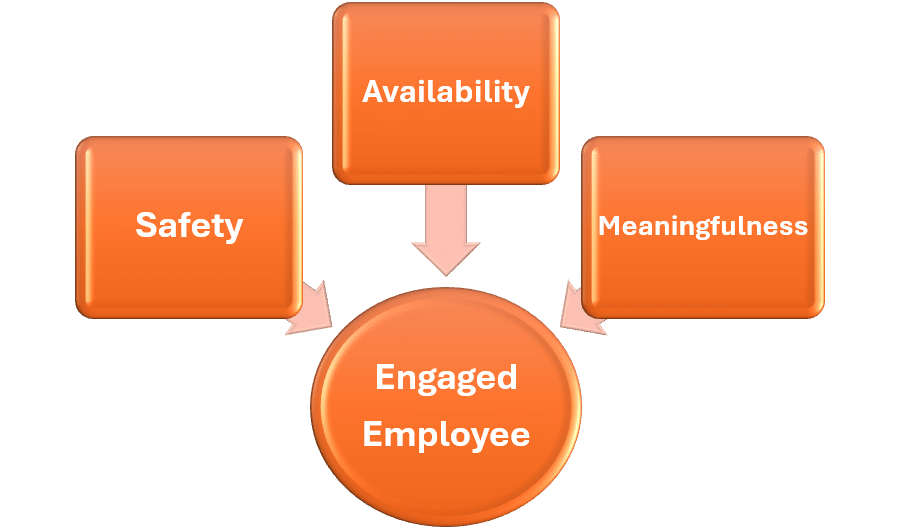
The last few months we’ve looked at two other drivers of employee engagement: psychological safety and psychological availability. This month, we’re diving into psychological meaningfulness, the third big piece of the pie.

So, what exactly is psychological meaningfulness? It’s when team members feel motivated within their positions and believe they’re a part of something larger than themselves. For many people, the purpose of working might be about getting a salary, but we don’t find many saying that salary is what makes their work purposeful.

Meaningful work is one of those things that looks different for each of us. For some, a positive impact can be about grand goals, such as fighting diseases, bringing forth political change or saving the environment. But it can also be more everyday impacts, such as helping customers or making a client happy.

While meaningful work looks different for everyone, there are some common components that come into play. Here’s a look at the three C’s of meaningful work, along with questions leaders can ask themselves to see if they’re focusing on workplace purpose:

  • Community: Do team members feel a strong sense of belonging?
  • Contribution: Do they understand how their work impacts others?
  • Challenge: Am I helping them grow in meaningful ways?

If you give people purposeful work, you set them up for success and they’ll reciprocate by pouring themselves into that work. Look around your office. Are team members engaged in projects or just going through the motions? Are leaders actively communicating the impact of projects and why they matter? If you feel like psychological meaningfulness could use a boost in your organization, Leah M Joppy and Associates is ready to help. We can help your organization identify the root causes of employee disengagement and implement strategies with real impact.

Learn more by calling us at 301-351-9523 or email us at leah@lmja.com.

Share
Categories
Coaching

Combating Burnout

The World Health Organization defines burnout as “a syndrome resulting from chronic workplace stress that has not been successfully managed.” In other words, this workplace phenomenon is a reflection on leadership, not a weakness in team members. Telling employees to “be more resilient” or to, “hang in there” just isn’t going to cut it right now.

The last few years have brought a fair share of challenges, to say the least. Burnout isn’t something that just happens overnight. It takes time to develop and can slowly creep into the workplace. What are some of the signs that your team is dealing with it? Be on the lookout for these 7 big ones:

  • Change in demeanor or attitude
  • Low-motivation or energy to do things they were previously motivated to do
  • Difficulty concentrating, remembering tasks or completing projects
  • Increased absenteeism or non-responsiveness
  • Lack of participation in team projects, meetings or events
  • High sensitivity to feedback or inappropriate reactions to criticism
  • Low productivity or difficulty maintaining a normal workload

In our last article that we said that psychological availability means employees feel like they have the physical, emotional and mental resources to do their job. There are a lot of issues that are out of the control of leaders right now, but there are ways they can increase levels of psychological availability and combat signs of burnout. Here are the top 5:

  • Ask how team members are really Check in and practice active listening.
  • Don’t micromanage, but empower. One of the main causes of burnout is a perceived lack of control.
  • Recognize efforts. Expressing gratitude helps team members feel that their work matters.
  • Make human connection a priority. A lack of social support can be a big driver of burnout, even if workers are back in the office.
  • Develop a shared sense of “why” and communicate to team members why their work matters.

It’s a myth that burnout is simply from overwork. Burnout comes from basic needs not being met over time. But with the right leadership strategies, it can improve substantially. Leah M Joppy and Associates can help you combat employee burnout and disengagement before productivity declines and turnover increases.

Call us at 301-351-9523 or email us at leah@lmja.com to learn more.

Share
Categories
Coaching

Psychological Availability: Providing Resources For Your Team

When you take a good, long look around your office, what do you see? Are team members engaged in projects or are they simply “going through the motions?” Do they have the proper technology to do their jobs and, at very least, a proper area to work? Is the environment inviting or dark and depressing?

All of these factors are just a few drivers of employee engagement. Last month, we looked at psychological safety and its impact on engagement. This month, we’re looking at psychological availability and the role it plays in a healthy, productive work environment.

So, what is ‘psychological availability’ and what does it look like? In short, it means that employees feel like they have the physical, emotional and mental resources to do their job. Here are some of the main factors that impact psychological availability:

  • Support from leadership
  • Ability to manage workload and stress
  • Having a trusting, comfortable team environment
  • Access to necessary equipment, comfortable workspaces, etc.
  • Feeling like there’s a healthy work/life balance

Making psychological availability a priority comes down to organizations creating a workplace where team members feel supported – both through a healthy physical and emotional environment.

We hear the term “burnout” all the time, but we don’t hear about “psychological availability” all that often. However, the two go hand-in-hand: a lack of psychological availability in the workplace is a key contributor to employee burnout. And, as we all know, burnout can be lethal to an organization’s productivity, morale and overall culture.

That’s where Leah M Joppy and Associates can help. We get to the root causes of WHY team members are feeling burned out and disengaged. Then, we work with you to come up with ideas and strategies to address these problems quickly.

Learn more by calling us at 301-351-9523 or email us at leah@lmja.com.

Share
Categories
Coaching

How Secure Are Your Team Members?

When was the last time you really observed and checked in on how your team is doing? Last week? Last month? Or maybe you can’t even remember. It’s no secret that the last few years have really taken a toll on motivation. Now, more than ever, it’s important that leaders are looking at how the workplace environment is shaping team members’ attitudes and perceptions.

What is Psychological Safety?

There’s an important component of workplace motivation and engagement that shouldn’t be ignored: psychological safety. You’ve probably heard this term thrown around, but what does it actually mean? It’s the belief that team members can be themselves and can take appropriate risks without fear of being penalized. It enables them to:

  • believe that they’re a valued member of the team
  • admit and discuss mistakes
  • talk about problems and tough issues
  • ask for help and feedback
  • trust that no one on the team is out to get them

What Does Psychological Safety Look Like?

So, the big question is, “How do I know if my team has psychological safety?” The answers to these 7 simple statements, developed by Amy Edmondston, Harvard Business School professor and author of The Fearless Organization, can give you a sense of whether or not they feel psychologically safe:

  • If you make a mistake on this team, it is not held against you.
  • Members of this team are able to bring up problems and tough issues.
  • People on this team often accept others for being different.
  • It is safe to take a risk on this team.
  • It isn’t difficult to ask other members of this team for help.
  • No one on this team would deliberately act in a way that undermines my efforts.
  • Working with members of this team, my unique skills and talents are valued and utilized.

How would you rate the level of psychological safety within your organization? Do team members feel comfortable sharing their ideas, questions and concerns or is there room for improvement? That’s where Leah M Joppy and Associates can step in and help. We can look at your current practices and help you craft new and innovative ways to communicate, problem-solve and engage with team members.

Learn more by calling us at 301-351-9523 or email us at leah@lmja.com.
 

Share
Categories
Coaching

Feeling Safe = Better Team

Psychological safety isn’t just ‘nice to have’ within an organization. It plays a big role in decision making, healthy relationships, greater innovation and effective execution.

Need the data to back up why it’s important? According to Accenture, organizations that prioritize psychological safety enjoy:

  • 76% more employee engagement
  • 74% less employee stress
  • 50% more productivity
  • 27% reduction in employee turnover

Here’s what psychological safety is not: It’s not about “being nice” or creating an environment where people have to feel comfortable all the time. Taking risks can make people feel like they’re out of their comfort zone. Mistakes happen and need to be pointed out in order for learning to take place. The key is that these risks and mistakes happen in a safe environment.

So, how do leaders cultivate a psychologically safe workplace? Here are 5 ways to get started:

  • Listen to feedback – and implement it: Commit to active listening (giving your full attention and summarizing what was shared) to understand team members’ feedback. And if it’s worth implementing, make sure you actually do it!
  • Avoid pointing fingers: Team members won’t want to take risks or try new things if they think they’ll shoulder the blame if things don’t pan out.
  • Model the behavior you want your team to emulate: Sharing your own mistakes and what you learned from them and asking thought-provoking questions in team meetings are a few ways to grow a more supportive culture.
  • Advocate for your team: Be their champion and have their back, especially with fellow leaders.
  • Celebrate lessons learned as much as you celebrate wins: Normalize having regular team meetings where you look back at recent milestones. Talk honestly about what went well and where you can improve.

It’s tempting to write off psychological safety as a feel-good, buzzworthy term that’s more focused on employee emotions than actual effectiveness. But plenty of research shows it isn’t a “woo-woo” concept. Psychological safety has real, measurable impacts! Leah M Joppy and Associates offers a fresh approach and perspective, combined with experience tackling all different types of employee disengagement issues, to help you jumpstart your team’s motivation!

Call us at 301-351-9523 or email us at leah@lmja.com to learn more.

Share
Categories
Coaching

Impact60 And Your Future Leaders

It’s no secret that cultivating a talented pool of future leaders is essential for an organization’s success. Yet, most struggle with the training and development of current leaders, much less planning for who’s next in the leadership chain. Add to it the challenge of training the younger generations, Millennials and Gen Z, who are used to learning in an entirely different way than traditional methods.

But don’t be fooled: Millennials and Gen Z value training and upskilling. In fact, it’s essential for their job satisfaction and willingness to stick around. One recent study found that 79% of Gen Z employees and 75% of Millennials said they’d actively look for a new job if their current employer didn’t offer upskilling opportunities.

That doesn’t mean that traditional, lengthy training sessions filled with PowerPoint presentations are going to cut it. These traits that define the younger generations are what they expect when it comes to learning:

  • Digital Natives: Millennials and Gen Z grew up with technology and expect digital experiences in their learning.
  • Purpose-Driven: They needs to understand the “why” behind training initiatives.
  • Work-Life Balance: Millennials and Gen Z prioritize flexibility in when and how they learn.
  • Feedback-Oriented: Regular performance feedback and recognition are crucial.

And the big one: time and efficiency. Millennials and Gen Z don’t want to spend hours in a classroom sitting and listening to a trainer. They do much better with shorter “bursts” of learning that fit training into their schedules without being overwhelming. That’s why Leah M Joppy and Associates has created Impact60, a series of 1-hour, highly focused, skills-based courses covering a variety of leadership topics. It’s an ideal way to start building your future pool of leaders while meeting them on their terms and expectations. Call us at 301-351-9523 or leah@lmja.com to receive course descriptions and pricing information.

Share
Categories
Coaching

Helping Leaders Lead In A Fraction Of The Time

Place someone in a leadership position and they may survive, but teach them how to lead, and they’ll thrive. In other words, effective leadership doesn’t just happen. It takes training and focused development.

Too often, organizations promote team members to leadership roles without making an investment in building their leadership skill set. And it can cause all kinds of problems: frustration on the part of the leader, poor morale from team members and an overall breakdown in communication.

To succeed, leaders need to build these 7 key leadership skills:

  • Build relationships: Create partnerships, build trust and share ideas.
  • Develop people: Help others become more effective through strength development and coaching.
  • Drive change: Embrace change and set goals that align with a well-communicated vision.
  • Inspire others: Encourage others through positivity, confidence and recognition.
  • Think critically: Gather and evaluate information that leads to smart decisions.
  • Communicate clearly: Share information regularly and concisely.
  • Create accountability: Hold yourself and your team responsible for performance.

As you can see, the list is made up of soft skills (personal traits and abilities that determine how well you work, collaborate and communicate with others). They aren’t something a leader is necessarily born with, but fortunately they can be developed through strategic and focused training.

The good news is that leadership training doesn’t have to mean hours (or days) sitting in a class, missing work and having to play catch up. ‘Short courses’ are an increasingly popular way to develop and enhance leadership skills in a fraction of the time. Designed to upskill leaders rapidly, these focused training programs are flexible, practical and targeted. And leaders can start implementing what they’ve learned right away.

Sound interesting? Leah M Joppy and Associates has created Impact60, a series of 1-hour, highly focused, skills-based courses covering a variety of leadership topics. More learning, more impact and less time away from the day-to-day!  Call us at 301-351-9523 or leah@lmja.com to receive course descriptions and pricing information.

Share
Categories
Coaching

Impact60: One-Hour Leadership Series

Welcome to Impact60—a virtual, focused, 60-minute leadership series designed to help managers and employees make a meaningful impact where it matters most: in your work, your team, and your organization.

Leadership isn’t defined by a title. It shows up in how we communicate, how we make decisions, how we respond to challenges, and how we support one another. Whether you manage people, projects, or simply your own responsibilities, your actions influence outcomes every day.

Each Impact60 session is intentionally short, practical, and actionable. In just one hour, we’ll explore a single leadership concept, break it down into real-world behaviors, and identify clear steps you can apply immediately. No theory overload—just insights that translate into impact.

This series is built for managers and employees alike because strong leadership cultures are created when everyone is engaged, accountable, and aligned. Managers will gain tools to lead with clarity and confidence, while employees will strengthen their ability to influence, collaborate, and take ownership.

Our goal is simple:
60 minutes. One powerful idea. Real impact.

The following Impact60 sessions are offered in condensed 60-minute sessions.  These  instructor-led sessions will focus on creating awareness of the topic and provide key skills and tools. It will also provide interactive activities to foster connection and opportunities for reflection and Q&A.  Sessions are virtual.  We are currently offering the following titles.

For All Employees

  • Reestablishing Routine and Expectations
  • Overcoming Compassion Fatigue
  • Effective Communication Foundation
  • Adapting to Change
  • Leading From Where You Are

For Managers/Supervisors

  • Creating an Inclusive Environment
  • Change Management Fundamentals
  • Conflict Management: Managing Expectations.  Pre-requisite required: completion of TKI workshop.  

The Three Drivers of Motivation: A Leadership Series (3 × 60-Minute Workshops)

Motivation doesn’t happen by accident, and it isn’t driven by incentives alone. Research shows that employee motivation and engagement are shaped by three core psychological drivers: psychological safety, psychological meaningfulness, and psychological availability. Together, these drivers determine whether individuals feel safe to engage, motivated to engage, and capable of engaging at work.

For course objectives and pricing, contact us at lmjainc@gmail.com or call 301-351-9523.


Share
Categories
Coaching

Impactful Training Capsulized

Another Netflix binge. Another hour shopping online. Another hour lost scrolling. After a challenging 2025 for so many of us, we’re looking for ways to use our time in a more constructive and fulfilling way. And what better way than taking classes to build new skills?

But who has the time to sit through weeks of coursework? Fortunately, there’s a highly effective – and proven – way to increase your knowledge and skill base without a huge time investment. Focused training broken down into micro series of capsulized learning is the answer.

Focused courses are an increasingly popular way to foster growth in a fraction of the time. Designed to upskill team members rapidly, these attentive training programs are flexible, practical and targeted. And they yield measurable outcomes, making them a worthy investment for organizations.

In a 2019 study, Gallup discovered that one of the most important factors in creating a high-performance workplace is cultivating a culture that values the growth of individuals. Gallup found organizations that made a strategic investment in employee development report 11% greater profitability and are twice as likely to retain their employees.

These manageable courses are not just an investment in your teams’ professional growth — they’re a commitment to your organization’s success. By fostering a culture of learning, you ensure everyone is ready to tackle future challenges. And if 2025 taught us anything, it’s that challenges can come at us quickly and fiercely!

Sound interesting? Leah M Joppy and Associates has created Impact60, a micro series of highly focused, skills-based courses covering a variety of leadership topics, such as Managing Compassion Fatigue, Foundation of Effective Communication, and Adapting to Change, to name a few. More impact in less time!

Learn more by calling us at 301-351-9523 or email us at leah@lmja.com.

Share

How Can We Help?

Leah M. Joppy & Associates

Derwood, MD 20855