
Archive

Categories
Uncategorized

Physical and Mental Health During Times Of Uncertainty

Life has few guarantees, but one thing you can count on is change. And for so many of us, the past few months have really put that to the test. Living with uncertainty for a prolonged period can feel like it’s taking a toll and often in ways that we don’t even realize. Last month, we looked at why we’re so resistant to change and how it challenges our sense of control and fear of the unknown. But what does dealing with uncertainty do to our bodies, both physically and mentally? Let’s take a look:

Common Symptoms in the Body

Everyone is different, but here are 3 common ways that uncertainty manifests in the body:

  • Muscle tension: Muscle tension is one of the most common physical symptoms since dealing with uncertainty causes the body to be in a continuous state of alertness. This stress can cause headaches, neck and back pain and overall achiness.
  • Digestive issues: Digestive problems are another common symptom. Many people experience stomachaches, nausea or changes in appetite when dealing with uncertainty. The stomach is extremely sensitive to stress and anxiety, making it more vulnerable.
  • Sleep issues: Sleep disruptions are also common. The constant worry and overthinking that accompany uncertainty can make it difficult to fall asleep or stay asleep. A lack of restful sleep often increases feelings of fatigue, irritability and difficulty concentrating.

Common Mental Impacts

Again, dealing with uncertainty has different impacts on everyone, but here are some common ways that it can affect mental health:

  • Increased anxiety and depression: Prolonged periods of uncertainty can lead to increased levels of worry, feelings of frustration and difficulty managing emotions
  • Lack of motivation: When you’re faced with so much change and so many questions, it can leave you feeling stuck and like nothing you do will really have an impact. This can make it challenging to start or finish tasks.
  • Racing Thoughts: Your mind may race with “what-if” scenarios and potential negative outcomes.
  • Irritability and Frustration: Living under a cloud of uncertainty can make you more short tempered, perhaps lashing out at co-workers, your partner or children.
  • Restlessness: You might find it difficult to sit still or it may be hard to relax.
  • Indecisiveness: You may have difficulty making decisions or feel paralyzed by the fear of making the wrong choice.

Perhaps you read the list and said, “yes, that’s me right now!” Your big question is: what do I do about it? Change and uncertainty aren’t going away, but how you react to it and take care of yourself is within your control. Some options to consider: seek outside resources such as counseling, a community support group, or  talking with a good friend or church member.  Another option is working with a coach, someone who is trained to help people manage uncertainty.

Leah M Joppy and Associates have coaches that can help you manage many situations. We can provide a fresh perspective, goal setting and accountability to help you achieve sustainable results. We are currently offering 20-minute complimentary exploratory sessions.  It’s an ideal time to book an appointment and talk to us about how you can work through uncertainty in your life. You don’t have to go it alone. We have also added 2 new courses. To learn more, call us at 301-670-0051 or email us at leah@lmja.com.


Share
Categories
Coaching Uncategorized

Effective Strategies For Building Your Resilience

Many of us work in constantly connected, ‘always-on’, highly demanding positions where stress and the risk of burnout are common. Add to that the changes of an upcoming administration and it can seem like it’s almost too much to deal with. Since the pace and intensity of our work culture aren’t likely to change anytime soon, it’s more important than ever to build resilience skills to navigate work life. As we discussed in our previous article, resilience is the ability to ‘bounce back’ from challenges and adversity. It can have a major impact on your stress level, mental well-being and overall job satisfaction.

The good news: resilience is a skill that can be developed and strengthened over time. The key is to get started! Here are 7 effective strategies to help foster a positive mindset, manage stress and ultimately develop more resilience:

  • Make your health a priority. A study from NIH found that people are 3.5 times more likely to be resilient when in good physical health. Prioritizing sleep, exercise and proper nutrition is essential, particularly during times of change. Physical health supports resilience and resilience also leads to better physical recovery.
  • Develop a daily routine. Developing consistent habits, no matter how small, can help you make meaningful progress. Build some coping mechanism exercises into your routine, such as breathing and relaxation exercises and a mindfulness practice to better deal with stressful situations.
  • Focus on what you can control: Discerning what you can and can’t control keeps you positive and motivated. It’s also important to not ruminate on the past and focus on what lies ahead.
  • Don’t focus on your weaknesses. Focusing on your strengths helps you grow much faster than trying to improve your weaknesses. As hard as it is, try to see failure as an opportunity. With the right mindset, it can actually be a catalyst for growth.
  • Build a support network. Connect with co-workers, mentors or friends who can offer encouragement and advice during challenging times.
  • Don’t dwell in self-pity. We all know firsthand that life can be hard, but dwelling on our circumstances keeps us from emerging from them and moving forward.
  • Don’t compare yourself to others. Define your own version of success that has nothing to do with others’ strengths and accomplishments.

Resilience is not just about surviving, but thriving in the face of adversity. And it can be your secret weapon for success. Leah M Joppy and Associates is ready to make 2025 the year you enhance your resiliency skills and face changes and challenges with confidence. Our course, Building Resilience In Times Of Uncertainty, includes a resilience assessment and offers feedback about resiliency levels in 3 key areas: Challenge, Control and Commitment. This course will help participants identify strategies to increase their resilience and help manage the uncertainty of what’s next.

Call us at 301-670-0051 or email us at leah@lmja.com for more information.

Share
Categories
Uncategorized

Kindness And Its Impact On The Workplace

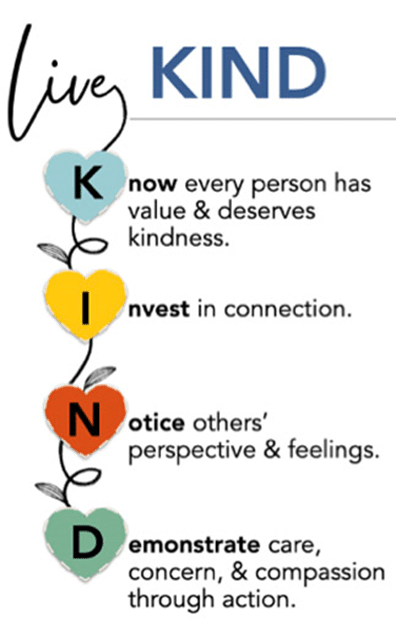
When you think about transformative practices in the workplace, the simple act of kindness may not be the first thing that comes to mind. But sayings like “one good act deserves another” and “one kind act will always create another” are more than posters on a wall or something that your mom said when you were young. Researchers from the University of California, San Diego and Harvard performed a kindness study and found that cooperative behavior is contagious. When people benefit from kindness, they “pay it forward” by helping others and create a ripple effect of cooperation. What a powerful tool to improve workplace culture and team member satisfaction!

Just as negativity can quickly permeate a team and cause issues, kindness has a powerful impact on a workplace environment. A ‘culture of kindness’ results in all kinds of amazing benefits, including:

  • Improved employee morale and increased retention: It’s simple: happy employees are more likely to stay and unhappy employees are more than willing to jump ship. Kindness is a key component. Team members who work in a positive environment have a better overall sense of well-being.
  • Enhanced collaboration and teamwork: Kindness fosters a sense of belonging and mutual respect among team members. This can lead to better problem-solving, increased creativity and better collaboration.
  • Reduced stress and better mental health: According to the Journal of Experimental Social Psychology, being generous and kind improves our own sense of well-being. Research like this shows that a supportive work environment can contribute to better overall well-being for workers.
  • Reduced conflict: Practicing kindness at work is a powerful way to diffuse tension and resolve conflicts between co-workers. Dealing with issues in an empathetic way helps employees reach resolutions more effectively and maintain a positive work environment.
  • Enhanced professional growth: A culture of kindness often creates an environment where employees feel comfortable asking for help, seeking feedback and taking risks. This can lead to professional growth with employees continuously improving their skill set.

We spend a majority of our waking time at work. Why not make it a place where spreading kindness and practicing compassion is the norm? This isn’t just a good thought that doesn’t produce results. Kindness can actually transform an organization! One of the best things about creating a culture of kindness is that it doesn’t take much to get started. Acts of service and kindness don’t need to be big or expensive in order to benefit organizations. If you’re feeling like your workplace could use a “kindness reboot”, Leah M Joppy and Associates is ready to help. To learn more, call us at 301-670-0051 or email us at leah@lmja.com.
Share
Categories
Uncategorized

Psychological Safety And Teams

Take a moment and think about the last time you had a meeting with your team members. Was everyone engaged and encouraged to share their ideas? When someone did speak up, was everyone listening or were they distracted by their phones? Were new ideas or questions met with interest and enthusiasm or was there a bit of laughing and a “that will never work” kind of attitude? As we go through our daily routine, we may not think about how the workplace environment is shaping the attitudes and perceptions of team members. But there’s an important component of workplace motivation and engagement that shouldn’t be ignored: psychological safety.

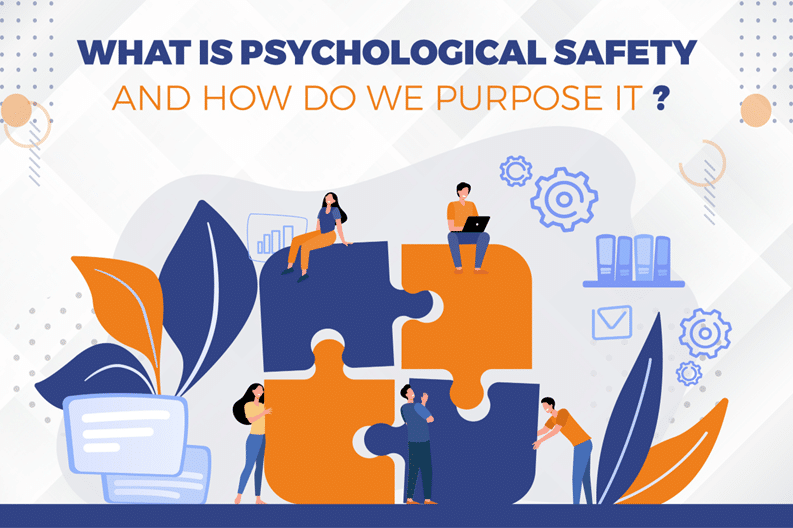
What exactly is psychological safety? It’s the belief that people feel safe in admitting they don’t know something or can disagree with an opinion without the risk of being thought less of, penalized, retaliated against or considered not a team player. It’s feeling comfortable taking risks and expressing work-related thoughts and feelings. Psychological safety plays a vital role in decision making, healthy interpersonal relationships, greater innovation and more effective execution within organizations.

The big question on leaders’ minds is, “How do I know if my team has psychological safety?” The answers to these 7 simple statements, developed by Amy Edmondston, Harvard Business School professor and author of The Fearless Organization, can give you a sense of the degree to which employees feel psychologically safe:

  • If you make a mistake on this team, it is not held against you.
  • Members of this team are able to bring up problems and tough issues.
  • People on this team often accept others for being different.
  • It is safe to take a risk on this team.
  • It isn’t difficult to ask other members of this team for help.
  • No one on this team would deliberately act in a way that undermines my efforts.
  • Working with members of this team, my unique skills and talents are valued and utilized.

A lot of what goes into creating a psychologically safe environment are good management practices. This includes things like encouraging open communication and actively listening to employees, making sure team members feel supported and making it clear that their voice and ideas matter.

Here’s what psychological safety is not: It’s not about “being nice” or creating an environment where people have to feel comfortable all the time. Taking risks can make people feel like they’re out of their comfort zone. Mistakes happen and need to be pointed out in order for learning to take place. The key is that these risks and mistakes happen in a safe environment.

Psychological safety has become a hot topic in the workplace and for good reason. An environment where it’s lacking results in greater employee dissatisfaction, less productivity and innovation and, ultimately, more turnover. How would you rate the level of psychological safety within your organization? Do team members feel comfortable sharing their ideas, questions and concerns or is there room for improvement? That’s where Leah M Joppy and Associates can step in and help. We can look at your current practices and help you craft new and innovative ways to communicate, problem-solve and engage with team members.

Ready to learn more? Call us at 301-670-0051 or email us at leah@lmja.com to learn more.

Share
Categories
Uncategorized

The Psychology Of Employee Engagement

We spend the majority of our week at the office, yet how often do we stop and think about what makes us really excited about our job? For leaders, do you ever consider what keeps team members motivated to do their best work? We get so caught up in the next project and deadline that sometimes we forget to focus on how to improve engagement in the office. That’s where the three principles of employee engagement come into play: psychological safety, psychological meaningfulness and psychological availability.

In our last article, we took a look at psychological safety. Here, we’ll take a closer look at the other two components: psychological meaningfulness and availability. All three were developed by organizational psychologist William Kahn, author of the 1990 study “Physical Conditions of Personal Engagement and Disengagement at Work”.

Psychological Meaningfulness

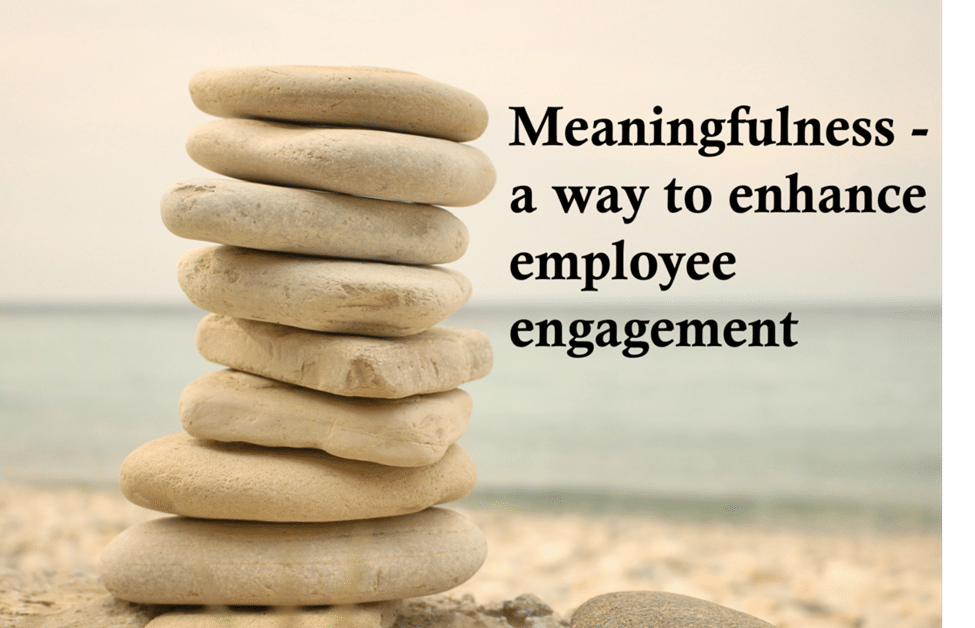
What is psychological meaningfulness? It’s when team members feel motivated within their positions due to challenge, opportunities for autonomy and strong goals. They feel like they’re a part of something larger than themselves. If you give people challenging and meaningful work, you set them up for success and they’ll reciprocate by pouring themselves into that work. Research from the American Psychological Association has shown that workers who perceive their jobs as meaningful report higher job satisfaction, are more engaged, have lower rates of absenteeism and even enjoy better health.

How can organizations increase psychological meaningfulness with team members? Here are a few tips to help:

  • Communicate the work’s bigger impact and make team members aware of the connection between their contribution and the result.
  • Recognize and mentor team members’ potential. Ask them what they’re interested in, learn what their strengths are and match them with opportunities.
  • Nurture personal connections with team events, check-ins, educational opportunities and social time.
  • Give team members autonomy and use “leading to support” behaviors (ie- clarify confusing or missing information related to team goals or tasks, provide reasons for any policy changes and encourage team members to be self-starters).

Psychological Availability

What is psychological availability? It’s when team members team members feel the demands of their position are reasonable and achievable. They believe they possess the physical, emotional and psychological resources necessary to do their job.

How can organizations increase psychological meaningfulness with team members? Here are a few ways to help:

  • Provide learning opportunities and feedback that allows them to feel confident about investing themselves in their work. In short, set team members up for success.
  • Ensure that team members have the necessary resources to do their jobs. This includes examining the physical work environment (noise level, lighting, accessibility to quiet meeting spaces, etc.).
  • Examine if the demands of the job are achievable. Make work/life balance a priority.
  • Provide empathy for personal situations by offering support and resources. Look for any changes in behavior and have regular check-ins.

Most organizations don’t know where to begin when it comes to helping their employees find more meaning in their positions and increase overall engagement. The typical “office perks” are often surface level and don’t delve into the root issues. That’s where Leah M Joppy and Associates can help. A fresh approach and perspective, combined with experience tackling all different types of employee disengagement issues is just what you need to jumpstart your team’s motivation! Call us at 301-670-0051 or email us at leah@lmja.com today.

Share
Categories
Uncategorized

When Your Team Hits An Obstacle

You and your team are working on a project and, suddenly a problem (or two or three) develop and threaten to derail your progress. Dealing with obstacles and challenges is a regular part of working life and overcoming them isn’t always easy. People tend to do three things when faced with a problem: 1) they get afraid or uncomfortable and wish it would go away; 2) they feel that they have to come up with an immediate answer and it has to be the ‘right’ answer; and 3) they look for someone to blame. Most of us are ‘conflict-adverse’. It makes us feel uncomfortable and dealing with that discomfort is a huge challenge. That’s why building a culture of creative problem solving in the workplace is so vital.

So, what exactly does creative problem solving mean? Creative problem solving or CPS is a method for approaching a problem or a challenge in an imaginative and innovative way, aka thinking “outside of the box”. It helps you redefine the problems and opportunities you face, come up with new, fresh solutions and then take action. If you do an Internet search on the term, you’ll find many variations, most of which can be traced back to the work started by Alex Osborn in the 1940s and further developed at Buffalo State College and the Creative Education Foundation. CPS is based on a few core principles:

  • Everyone is creative.
  • Creative skills can be learned and enhanced.

CPS is an essential soft skill that can help leaders and team members find new solutions to old problems and thrive in a fast-paced and ever-changing environment. Making creative problem solving a priority has a wealth of benefits for organizations:

  • It encourages innovation
  • It improves productivity
  • It allows for adaptability
  • It fosters growth

And here’s a really big one: It leads to better job satisfaction. When people are encouraged to be creative, they’re also more engaged. They’re not just solving problems in the stale, same old way, but are brainstorming and coming up with new, fresh ideas to approach challenges. This encourages retention and more joy in the workplace. And who doesn’t want that in today’s competitive hiring environment?

How many of us have had training in problem solving? We know it’s an important part of our role, but do we actually know how to do it effectively? That’s where working with a coach, like Leah M Joppy and Associates, can help. We can walk you through the CPS process, work with your leaders and team on how to approach problem solving in a fresh way and support you through any challenges during the entire process. Call us at 301-670-0051 or email us at leah@lmja.com to learn more.

Share
Categories
Uncategorized

The Resistance To Returning To The Office

A few years ago, it seemed like remote work was poised to become the norm, but fast forward to 2024 and it’s quickly becoming a sign of the past. Despite overwhelming enthusiasm and support for telework from workers, the trend is shifting and return-to-office (RTO) mandates are becoming more and more prevalent. In May, U.S. Senators Joe Manchin (I-WV) and Mitt Romney (R-UT) introduced the bipartisan Back to Work Act of 2024 to bring employees of federal agencies back to in-person work. This legislation would limit telework to no more than 40% of days within an employee’s pay period and require agencies to report to Congress on the productivity of its telework activities.

Just like private companies whose workers threatened to leave their positions before RTO mandates, there is now similar data from government agencies. Here’s a look at a few:

• An Environmental Protection Agency survey reveals 65.9% of employees indicated they would consider leaving the agency if telework and remote work opportunities were diminished. Additionally, 80% of respondents anticipated experiencing “personal hardships” if telework were reduced.
• At the National Science Foundation (NSF), a survey revealed that 42% of respondents feel that being required to work in the office four days per pay period would significantly affect them. In addition, 27% of NSF employees view RTO expectations as “unworkable” and said they would consider finding new employment or retiring.

So, why are workers so dead set against returning to the office? Here are the most common objections:
• Commuting: The time, energy, cost and stress that workers face before even stepping into the office is one of the biggest deterrents. Some people even moved during the pandemic to get out of the city and into a larger space. This means even more time spent on commuting.
• Lost productivity in the office: People learned how to be more productive working from home and the experience shined a light on some of the inefficiencies of being in the office.
• Childcare and pet costs: The pandemic really highlighted the struggles of maintaining a healthy work-life balance, as well as the cost of spending so much time in the office. So, it’s no surprise that childcare costs and having to leave pets at home were top reasons keeping employees out of the office.
• Unenjoyable office environment: Noise levels will always be one of the reasons people may not want to work in the office, but workers also want to know when their colleagues are going in to work so they can avoid ending up in an empty office. Coordinating that overlap has proved challenging for many organizations.

How is your agency handling return-to-office mandates? Most importantly, how are your team members handling it? Like many leaders, you probably have concerns about recruitment and retention. It’s a challenging situation that can make you feel like you’re powerless. Leah M Joppy and Associates is ready to work with you to face the hurdles and develop RTO strategies for both you and your team members. Each department is different and faces a unique set of challenges. We’ll learn about yours and help you come up with effective solutions.

Call us at 301-670-0051 or email us at leah@lmja.com to learn more.

Share
Categories
Uncategorized

Listening To The Workforce: How To Make Remote Work Successful

There are so many reasons to love remote and hybrid work. For some, it’s rolling out of bed and starting the work day without the hassle of a long, stressful commute. For others, it’s the flexibility of picking up their kids from school or throwing in a load of laundry during lunchtime. Whatever the appeal, remote and hybrid work models are here to stay. Organization must embrace it if they want to remain competitive and recruit new team members. And the numbers back this up:

  • According to job site ZipRecuiter, jobs specified as “remote” receive 300% more applications than jobs that are not.
  • Organizations that don’t offer any kind of flexible-work options could be losing out on up to 70% of job seekers, according to HR consulting firm Thrive HR.
  • Nearly half (45 percent) of government employees will consider looking for a new job if their agency reduces remote and hybrid work flexibility, according to Eagle Hill Consulting research. These findings come on the heels of new federal government guidance that calls for a substantial increase in in-person work, along with unprecedented challenges filling government jobs.

Offering remote/hybrid positions is one thing, but execution is quite another. Once you have new team members in the door, it’s essential that managers know how to lead remote and hybrid workers. No one wants to feel like they’re out of the loop and continuous frustration with communication, technology and overall job satisfaction can lead to turnover. That’s why strong, well-trained leaders are key to the entire process.

When it comes to managing a remote/hybrid team, let’s start with a few of the basics. We’ve outlined a few “dos and don’ts” below. Maybe you’re already using most of them or perhaps they’re a good reminder of where you need to improve:

  • Do set immediate and clear expectations. And make sure they’re communicated clearly to everyone.
  • Do schedule regular team meetings and make them a priority (no regular cancellations!).
  • Do provide necessary resources. Leaders must ensure team members have the technology and other tools they need to succeed in a remote and/or hybrid environment.
  • Do engage directly with employees as often as possible. Have an open-door policy and set aside time for one-on-one conversations
  • Don’t just have a communication strategy in place, document it and share it. Everyone needs to be on the same page.
  • Don’t just encourage feedback, make it a priority. Really take the time to listen to team members.
  • Don’t micromanage and make employees feel like they’re not trusted.

Remote and hybrid work schedules only continue to grow in popularity and can be a major recruiting tool when trying to attract new team members. But implementation needs to be done correctly in order to retain workers. Leah M Joppy and Associates can help you figure out your primary challenges and work with you and your team to make remote/hybrid working a more efficient, productive and fun experience! Call us at 301-670-0051 or email us at leah@lmja.com to learn more.

Share
Categories
Uncategorized

Is There A Future In Remote Work?

Looking ahead, the future of remote work seems to only be increasing and flourishing. According to Upwork, by 2025, an estimated 32.6 million Americans will be working remotely, which is about 22% of the workforce. This projection suggests a continuous, yet gradual, shift towards remote work arrangements.

For many organizations, flexibility is a new part of their compensation package and is a powerful tool in terms of employee engagement, retention and recruiting. Remote and flexible schedules not only provide employees with job satisfaction, but better health, increased work-life balance and less stress.

How does the federal government stack up in terms of remote and hybrid work? According to an annual government-wide survey conducted by the Office of Personnel Management,

more than two-thirds of federal employees are still teleworking at least occasionally. About one-third of the over 625,000 people surveyed said they do not telework at all, due to technological limitations, in-office requirements or personal choice. The remainder, about 68%, telework at least occasionally and most people said they telework three to four days per week.

Even as calls for in-person work have pushed leaders to reconsider remote work policies, they seem reluctant to do so. Remote and hybrid work benefits employers through higher productivity levels, decreased turnover and reduced absenteeism. And as we saw in our previous article, remote and hybrid positions equal more job applicants. Here are a few other ways that it benefits government agencies:

  • Ease with recruiting: Public sector recruitment isn’t always easy. Sometimes salaries are less competitive than the private sector, causing many potential hires to consider working for businesses instead. In offering a fully-remote or hybrid work structure, government agencies can increase the odds of finding an ideal candidate.
  • Casting a wider hiring net: With work from anywhere a reality, organizations can hire candidates anywhere in the world who will have the skills and qualifications needed, even if they don’t live there. The best may not live within driving distance of the office, but that shouldn’t be a barrier to employment.
  • Increasing diversity in the workplace: Studies have shown that groups, including women, people of color and those with disabilities, view remote work positively. Allowing staff to work from anywhere instantly increases the diversity of your candidate pool and removes obstacles to employment such as lack of transportation.

Recruitment and retention in today’s competitive hiring landscape can be a challenge. A strong remote and hybrid workplace can be just the tool your organization needs to attract a larger pool of qualified candidates. Leah M Joppy and Associates can help you create an effective recruitment strategy that outlines your remote workplace model and why potential new hires should work for you! Contact us at 301-670-0051 or email us at leah@lmja.com to learn more and get started.


Share
Categories
Uncategorized

The Government and Artificial Intelligence

Conversations about Artificial Intelligence (AI) have been going on everywhere over the past year. The capabilities of ChatGPT, the generative AI chatbot developed by OpenAI, have gone viral across social media and we’ve marveled as it answered complex questions in seconds with shocking accuracy. But as AI has seemingly blown up and commanded our attention, it also poses as many questions as it answers. How will it impact the future of the workplace? And what will jobs look like moving forward?

A new report from Fedscoop.com, “Gauging the Impact of Generative AI on Government,” surveyed 200 government program and operations executives, as well as IT and security officials. The report identified the major issues and concerns executives face as they consider adopting generative AI in their agencies. It found that three-fourths of the leaders polled said that their agencies have already begun establishing teams to assess the impact of generative AI and are planning to implement initial applications in the months ahead. And according to a new database uploaded to the AI.gov website, the government recently disclosed more than 700 artificial intelligence use cases among federal agencies.

Let’s take a closer look at some of the numbers from this survey, as they provide interesting insight into how agency leaders view the future of AI:

  • Survey respondents feel generative AI will provide major opportunities for employees. The top opportunities include:
    • Ability to give employees added technical support (eg: a co-pilot): 65%
    • Ability to reduce the time required to complete work processes: 64%
    • Ability to free up employee tasks to produce more valuable work: 63%
  • Nearly half of the agency business executives polled expect one or more generative AI applications will be rolled out in the next 6-12 months for data analytics, IT development/cybersecurity and business operations. IT executives are more confident in the timeline: roughly two-thirds believe it will happen within the next 6-12 months.
  • A significant percentage of leaders (71%) believe that the potential advantages of using generative AI in their agency’s operations outweigh the perceived risks.
  • Half of all executives polled (and 64% of those at defense and intelligence agencies) cited a lack of employee training to use generative AI responsibly as a top concern. However, only 32% noted the need to develop employee training programs as a critical employee concern. This suggests a big disconnect in how agency leaders view AI training.

We’re all at the beginning of a journey to understand generative AI’s power and capabilities. Research suggests that this new era of AI will transform roles and increase performance across areas such as customer interactions, data analysis and software development. However, the roll-out and implementation of AI is only as good as the communication by leaders and the training of workers. Most of all, it calls for careful planning. Call us at 301-670-0051 or email us at leah@lmja.com for more information.

Share

How Can We Help?

Leah M. Joppy & Associates

Derwood, MD 20855