Archive

Categories
Coaching

How Your Organization Can Attract Millennial and Gen Z Employees

Finding the right employees can be tough, but keeping them can be even tougher. In 2022, 46.2 million workers voluntarily quit their jobs, becoming what’s now known as The Great Resignation. And it’s estimated that 46% of the American workforce wants to switch jobs in 2023, making employee retention a key concern. Now more than ever, organizations need to come up with fresh approaches to retain their current workers. This is especially true of Millennial and Gen Z employees.

Let’s take a look at these two groups. Millennials were born between 1981 and 1996 while Gen Z refers to those born between 1997 and 2012. Between the two of them, they make up almost 50% of the workforce today. Gen-Z alone is expected to form 27% of the workforce in the next two years. Both Millennials and Gen Z have a reputation for job hopping and lacking “company loyalty”. However, if organizations make an effort to understand the needs and wants of these two groups and grant them the opportunities to grow and thrive, this reputation isn’t always true.

Your recruitment strategies may have helped you acquire a new crop of employees, but if they are not rewarded appropriately with career opportunities, development and other incentives, there is a larger risk of them leaving. What are some of the top things that Millennials and Gen Z look for in an employer? Here’s a glimpse at 5 of them:

  • Offer them flexibility and work-life balance: Some may bristle at the work-from-home or hybrid model, but it’s here to stay. Gen Z and millennial employees value flexible work places and working practices and are interested in jobs that will be adaptable to their lifestyle.
  • Place an emphasis on their well-being: Millennials and Gen Z want to work for organizations who take care of them and their health as individuals. And it’s not just about physical well-being, but mental health as well.
  • Provide them with strong, transparent managers: Management really matters! Grant these two groups more autonomy and less micromanagement, communicate openly and seek their input and ideas.
  • Invest in their growth: Gallup found that 87% of millennials rate development opportunities as important to them in a job and LinkedIn found that 76% of Gen Z say learning is key to their success.
  • Provide them with mentors: A study by CNBC found that 90% of employees who have assigned mentors say they are happy in their jobs. And greater employee satisfaction leads to better retention!

In today’s multigenerational workforce, organizations can no longer rely on a one-size-fits-all approach to retaining and motivating employees. The most successful organizations truly understand employees’ expectations in the workplace. Leah M Joppy and Associates can work with your organization to build an effective employee retention strategy and help you create programs, systems and communication styles that they meet different employee needs, whatever generation they are from.

Ready to learn more? Call us at 301-670-0051 or email us at leah@lmja.com.

Share
Categories
Coaching

The Composition Of An Effective Team

Have you ever been a member of (or led) an exceptional workplace team? What are some of the positives that come to mind? Was it engaging and collaborative? Did you meet and exceed your goals? Did everyone feel valued and appreciated? It’s a great feeling, isn’t it? Yet all too often, teams fall short of being as effective as they can be and reaching their potential. The impacts are felt by employees, leaders and organizations as a whole.

So, what exactly do we mean by an “effective team”? It’s the capacity of a group of people, usually with complementary skills, to work together to achieve its goals and objectives. And it’s one of the biggest indicators of an organization’s success. According to Gallup, teams that rank in the top 20% for connectedness see 41% less absenteeism, 59% less employee turnover and a 66% increase in employee wellness. With numbers like that, it’s hard to argue that high performing teams are an integral part of your organization and worth the investment to develop and nurture.

Teams are as varied and unique as the people within them, but when it comes to effective, high performing teams, there are some common characteristics:

  • Clear, achievable goals
  • A shared commitment
  • Clarity of roles and responsibilities
  • A sense of purpose
  • Clear processes and procedures
  • Joint accountability
  • A result-oriented approach

Effective teams also tend to show greater resilience by working through challenges and bouncing back from adversity. They also tend to maintain vitality and the energy needed for future success.

It’s no surprise that an effective team is only as strong as the person leading it. In our next article, we’ll get into more about what it takes to lead a high-performance team. The right leadership enhances a team’s success, but far too often, people are placed in leadership roles without any proper leadership development training. It’s vital for leaders to take advantage of every opportunity to enhance their leadership skills. However, it’s also vital for organizations to provide these opportunities in the first place. Working with a coach like Leah M Joppy and Associates can help your leaders identify their strengths and weaknesses and develop the skills needed to build effective teams (strong communication, building trust and resiliency, defining roles and responsibilities and so much more).

Do you want to lead a high performing team, but don’t know where to start? Contact Leah M Joppy and Associates at 301-670-0051 or email us at leah@lmja.com to learn more and get started.


Share
Categories
Coaching

Top Five Suggestions For Leading An Effective Team

Today’s leaders often feel like they’re in a never-ending game of tug-of-war. Between dealing with day-to-day obstacles, managing projects and team members, it can be overwhelming. The “people” component is certainly the most integral to an organization and can prove to be the most challenging. Building a high-performing team is more than just putting together a group of talented people with the right skills. It requires careful development of each member’s unique talents and characteristics.

There is so much strong leaders can do to build effective, high-performing teams. Here’s a look at the top five suggestions. But remember, it’s a marathon and not a sprint. It’s a continuous process and not a “one and done” task:

  • Establish meaning and purpose: It’s a leader’s job to help employees and teams find meaning in their work. To increase productivity and motivation, have discussions about the “why” of your team’s tasks. Team members who are passionate and motivated help drive team effectiveness because they understand how their work contributes to the organization’s overall objectives.
  • Define roles and responsibilities: Leaders must ensure that everyone on the team knows exactly what is expected of them. It reduces confusion and conflict and allows teams to work more efficiently. Role clarity also enables leaders to hold team members accountable for their performance and identify areas where someone may struggle.
  • Communicate effectively: Effective communication and effective leadership are definitely intertwined and it can make, or break, a team. As a leader, it’s vital to: practice active listening and allow people to give constructive feedback without fear of repercussions; ask questions and don’t be defensive; have an open-door policy; follow through with actions.
  • Focus on building relationships: Building relationships helps to create (or reinforce) an organization’s values and culture. Once leaders and team members genuinely trust and respect each other, regular, open dialogue about individual and team performance increases team effectiveness.
  • Provide productive, specific and timely feedback: Feedback is critical to improving performance, but how you deliver it can make a big difference. Productive feedback enables team members to see their successes and missteps and grow from the experience.

To build high-performing teams, organizations must cultivate high-performing leaders. People skills typically account for 80 percent of success in a leadership role. Yet many people are promoted into leadership because of their technical capabilities, without mastering the skills of managing and motivating others. Without these basic skills, leaders at every level can struggle with building high-performing teams. Leah M Joppy and Associates understands the challenges that accompany leadership roles and knows the proven techniques for building strong leaders who can build motivated, productive teams.

Ready to learn more? Call us at 301-670-0051 or email us at leah@lmja.com.
Share
Categories
Coaching

LMJA capability – April 2023

LMJA capability – April 2023

Share
Categories
Coaching

Drivers Of Engagement

According to recent research by Gallup, the percentage of engaged workers in the U.S. dropped in 2021 for the first time in a decade. The trend continued into 2022 with only 32% of full and part-time employees engaged and 17% actively disengaged. These lower levels of engagement have certainly fueled “The Great Resignation” with workers looking for more meaningful work, greater flexibility and increased work-life balance. Employee engagement is a topic that organizations can no longer push under the rug, but need to examine more closely and determine what’s working and what isn’t.

Let’s start by defining employee engagement. In a nutshell, it’s the measure of how involved and enthusiastic your team members are about coming to work every day. It’s their emotional commitment to your organization, including the mission, core values and vision. Here’s what engaged employees look like:

  • They’re proud of where they work and typically happy with their job, manager and company culture
  • They intend to stay with an organization
  • They would recommend their workplace to others
  • They’re actively interested in their job and support and encourage fellow team members

Now that we know what employee engagement is, what are some of the top drivers of engagement? Most of us would say compensation, and while it certainly plays a role, it’s not the most important factor. Here’s a look at the top 5:

  • Strong leadership: One of the biggest discoveries from Gallup’s employee engagement research is that managers or team leaders alone account for 70% of the variance in team engagement. That’s quite a percentage! Strong leadership truly matters.
  • Caring organizational culture: Like strong leadership, an organization’s culture plays a prominent role in how team members feel about their job. Helping team members feel that the work they’re doing is essential for the success of the organization will create a positive employee experience. A culture that emphasizes work/life balance and employee wellness (just to name a few), goes a long way in boosting engagement.
  • Meaningful work: Everyone wants to feel like their work means something and has a purpose. It boosts enthusiasm, productivity and connection. It’s also a major driver of employee retention.
  • Professional growth opportunities: Research shows that employees are much more likely to be engaged in jobs with organizations that make learning and professional development part of their culture. Fostering personal growth opportunities helps employees achieve their personal goals and leads to greater satisfaction and dedication.
  • Regular feedback and recognition: Having a consistent system of feedback within an organization is one of the best ways to build strong communication. In organizations that emphasize feedback as an important part of their culture, employees receive regular, helpful feedback from direct supervisors and are encouraged to provide meaningful feedback to co-workers and leadership. It’s truly a two-way street.

As you read this list, think about your organization. Do you feel like you’re hitting the mark on all five? Or maybe you notice weak spots and see room for improvement. Working with a coach, like Leah M Joppy and Associates, can help. We collaborate with you to look at areas where engagement is low, establish where improvements can be made and come up creative solutions that will increase team members’ engagement and morale.

There’s no better time than the present to get started! Team members want more than a good paycheck and a warm, fuzzy feeling to feel invested in their work and contribute their best to an organization. Call us at 301-670-0051 or email us at leah@lmja.com

Share
Categories
Coaching

Finding Confidence In Our Lives

American philosopher and psychologist William James once said that, “Most people live in a restricted circle of potential.” Although he made this observation over a century ago, it still holds true today. When it comes to fulfilling our potential, it’s often not a lack of resources, opportunity or intelligence, but a lack of self-confidence. We often become our own worst enemy when we continually doubt ourselves and listen to the self-defeating voices in our head.

Many of us mistakenly believe that confidence is something certain lucky people are born with and the rest of us are just futilely trying to find it. But confidence is simply the outcomes of our own thoughts and actions. It’s the belief in our ability to succeed at a task. For example:

  • Our belief that we can give a speech in front of an audience
  • Our belief that we can exit an unhealthy relationship and find one more fulfilling
  • Our belief that we can change career paths or start a business

You get the picture. Our brain tells us a lot – some of it’s true, but a lot of it isn’t. It’s those untrue, self-defeating thoughts that hold us back from taking the steps necessary for meaningful change. On the flipside, self-confidence gives us the courage to break out of our comfort zone and face fears head-on.

The Benefits of Self-Confidence

There’s no doubt about it – having confidence in ourselves feels good! However, there are many other benefits that confidence brings to our lives. Here’s a look at a few:

  • More resilience: Resilience is the ability to cope with and recover from setbacks. Higher levels of self-confidence enhance your resiliency and help you bounce back from life’s challenges.
  • Healthier relationships: When you have confidence in yourself, it helps you better understand and care for others. It also helps you identify relationships that aren’t healthy and gives you the strength to move on.
  • Better performance: Many of us waste our time worrying that we’re not good enough. Self-confidence doesn’t mean you’re not going to make mistakes or even fail, but it will help you devote your energy to what matters instead of self-deprecating thoughts. And that translates to better performance no matter what task is in front of you.
  • Willingness to try new things: Whether you want to sign up for a class, learn a new skill or tackle that half marathon, self-confidence makes you more willing to try new things and put yourself out there.

We can all relate to the ebb and flow of confidence throughout our lives. Even if you’ve spent years doubting your abilities and feeling like you can’t take the steps to break out of self-defeating beliefs, it’s never too late to change course. Working with a coach, like Leah M Joppy and Associates, can put you on the right path towards greater self-confidence. You’ll learn why you’re stuck in a pattern of negative thoughts, how you can break the cycle, tools you can use to bring lasting change and so much more.

Contact us today at 301-670-0051 or email leah@lmja.com and let’s squash those negative thoughts and enhance your life through strengthened confidence!

Share
Categories
Coaching

The Role Of Confidence In The Workplace

According to a survey by the job site Indeed, 94% of employees said that confidence is vital to complete daily tasks at work and believe it’s a major contributor to overall career growth. In addition, 98% of those surveyed said they perform better when they feel more confident. These numbers aren’t exactly surprising, but they do highlight the importance that self-confidence plays in the workplace. As we mentioned in our last article, the good news is that confidence isn’t something you’re born with, but something we can all build, practice and reinforce!

We all want to feel confident at work, but often, it feels like there are forces beyond our control. Maybe you’re new to a job or career path and are terrified of making mistakes. Perhaps you feel like you’re underqualified in a leadership role and don’t have what it takes to build a successful team. Or maybe you’ve always been really hard on yourself and constantly question whether you have what it takes to succeed. Whatever the case, these self-defeating thoughts aren’t doing you any favors and can hold you back from promotions, management roles and more. Self-confidence in the workplace has so many positives, including better communication skills, increased ability to handle feedback and conflict, greater happiness and a decrease in comparing yourself to others.

So, what does confidence in the workplace look like? Not everyone expresses self-confidence in the same way, but there are some common traits that confident people possess. Here’s a few:

  • They don’t seek validation from others
  • They don’t worry about things outside of their control
  • They aren’t afraid to ask for help
  • They’re decisive and assertive
  • They recognize when they make a mistake
  • Their verbal cues match their non-verbal cues (they’re genuine and sincere!)
  • They appear confident through their eye contact, dress, body language, etc.

How many do you see in yourself?

Think of the times you’ve let self-doubt seep into your mind. Remember the worry, the sleepless nights, the doubts that you really deserve that promotion you’ve been working for. If you feel like your lack of self-confidence is holding you back in your career, Leah M Joppy and Associates is ready to help you squash those self-defeating patterns. We’ll work together to look at your goals and aspirations, where self-confidence plays a role, what’s holding you back and tools that you can use to make positive changes.

Call us at 301-670-0051 or email leah@lmja.com and let’s start the journey towards greater self-confidence together.

Share
Categories
Coaching

Burnout For Individuals

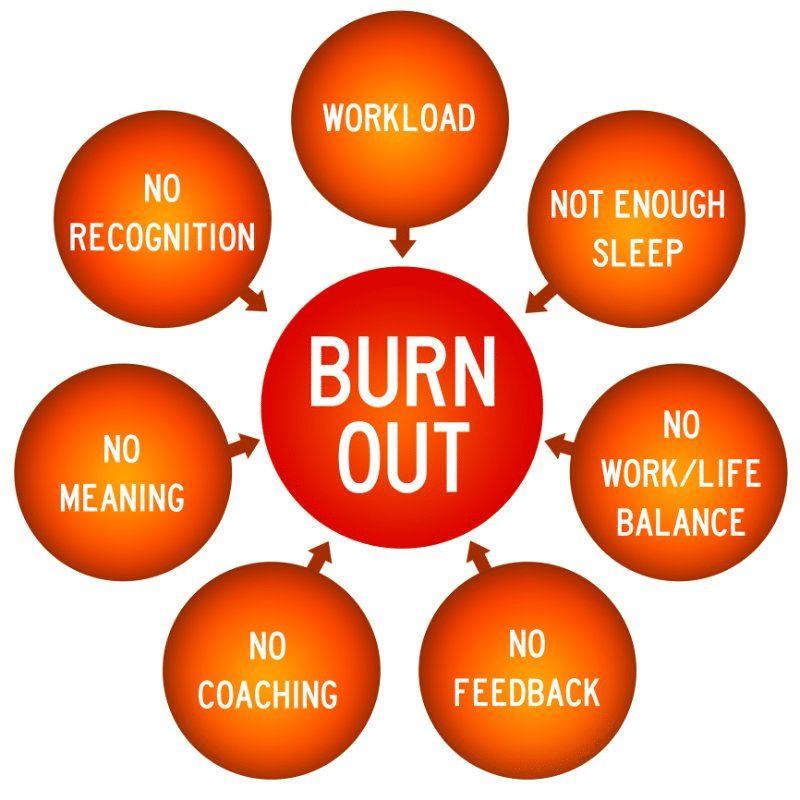
We all have days when we feel overwhelmed, unappreciated or helpless. Sometimes just getting out of bed and facing the workday can feel like an impossible task. However, if you feel like this most of the time, you might be dealing with more than you think. You could be suffering from burnout, a gradual process with subtle signs and symptoms that worsen over time.

We hear the term “burnout” all the time, but most of us think it’s just another name for stress and all of the challenges that come with it. But there is a distinct difference. Stress is having too much on your plate (too many responsibilities, work to handle, etc.), but burnout is the opposite. With burnout, you may feel like you don’t have enough, as in not enough energy or not enough motivation. It feels like you’ve run out of gas and completing even small tasks can seem like an impossible feat. Burnout has become a chronic issue in the workplace, so much so that in 2019, the World Health Organization classified it as an “occupational phenomenon.” And this was before the pandemic.

When we’re going through the day-to-day of life, often we don’t feel like we have time to step back and assess our overall mental health. We just keep pushing through to get it all done. But burnout is sneaky. What starts as a few “bad days” or weeks can result in something far more serious. Burnout can affect every aspect of a person’s life from emotional to physical and behavioral. Below, we’ve broken down the signs and symptoms of each:

Emotional Symptoms

  • Feeling hopeless and trapped
  • Experiencing loss of motivation
  • Having an increasingly cynical and negative outlook
  • Feeling like a failure and experiencing self-doubt and lack of accomplishment

Physical Symptoms

  • Feeling drained and tired the majority of the time
  • Experiencing frequent headaches and muscle aches
  • Dealing with changes in appetite and sleep habits

Behavioral Symptoms

  • Taking frustrations out on others
  • Withdrawing from responsibilities and isolating from other people
  • Using food, drugs or alcohol to cope
  • Continually procrastinating or taking longer than usual to get things done

Burnout not only leads to issues in the workplace, but spills over into every area of life, including home and social life. But when you’re in the midst of burnout, taking the first step towards a solution can feel almost impossible. That’s where working with a coach, like Leah M Joppy and Associates, can be a vital source of healing. We get to know you and the root causes of what’s leading to burnout. We can then help you build habits that lead to improved sleep and relaxation, help you find your motivation again and build that essential work/life balance that’s missing in so many of our lives.

Don’t put yourself on the backburner and let burnout sneak up and take control of your life. Contact Leah M Joppy and Associates at 301-670-0051 or email leah@lmja.com to learn how we can help.

Share
Categories
Coaching

Burnout For Organizations

Burnout. It’s something no one wants to feel and it’s an issue that no organization wants to experience. But increased levels of employee burnout are becoming more common across every industry and not just the ones we think of most, like healthcare and teaching. Many organizations think of burnout as an “individual problem,” solvable by an employee just taking the afternoon off or practicing some breathing techniques. Wrong! It affects your organization at every level and has a negative impact by decreasing morale and increasing turnover.

According to the World Health Organization, burnout is a syndrome resulting from workplace stress that has not been successfully managed. It’s characterized by three dimensions: feelings of energy depletion or exhaustion; increased mental distance from one’s job or feelings or negativism or cynicism related to one’s job; and reduced professional efficacy (World Health Organization, 2019). It’s incredibly costly for organizations. Consider these statistics: according to the American Psychological Association’s 2021 Work and Well-being Survey of nearly 1,500 U.S. workers, 79% of employees had experienced work-related stress in the month before the survey. Nearly 3 in 5 employees reported negative impacts of work-related stress, including lack of interest, motivation, or energy (26%) and lack of effort at work (19%). Meanwhile, 36% reported cognitive weariness, 32% reported emotional exhaustion, and 44% reported physical fatigue—a 38% increase since 2019.

It’s important to train managers to recognize the signs of burnout in team members and have a comprehensive plan in place to address underlying issues. Symptoms of burnout include:

  • Decreased engagement and enthusiasm in work
  • Increased absenteeism
  • Decreased productivity
  • Isolation
  • Higher sensitivity to feedback

Employee burnout is one the most pressing challenges that organizations face today. Leaders need to know the prominent signs (as we outlined above) and how to work with team members on solutions that have a lasting impact. It’s no small task, but in the end, it’s a win-win for everyone. Leah M Joppy and Associates is ready to help your organization face any workforce burnout issues head-on before they become major problems. Call us at 301-670-0051 or email leah@lmja.com and let’s discuss your needs.

Share
Categories
Coaching

Psychological Safety

Did you ever have an experience in the workplace that didn’t sit right with you? If so, did you feel comfortable speaking up? Perhaps you had an idea about how to improve something within your organization. Did you feel confident sharing it or did you think “why bother” and keep it to yourself? Turns out, the level of psychological safety within your office often dictates the answer to these questions and the overall culture of an organization.

As I mentioned in past articles, I have recently completed a certification from Cornell University on Diversity, Equity and Inclusion. The course, taught by Professor Nishii, tackles the issue of employee engagement and its three components. So far, we’ve examined psychological availability and psychological meaningfulness.  This month, we’ll look at the third component: psychological safety.

What Is Psychological Safety?

Organizational psychologist William Kahn, author of the 1990 study “Physical Conditions of Personal Engagement and Disengagement at Work”, defined psychological safety as “being able to employ one’s self without fear of negative consequences to self-image, status and career”. Harvard Business School professor, Amy Edmondson, brought the idea to the masses and described it as, “a climate where people feel safe enough to take interpersonal risks by speaking up and sharing concerns, questions or ideas.” The ultimate goal is a feeling of belonging and feeling heard. And it’s something every organization should prioritize.

Why Is Psychological Safety Important?

There are few things more frustrating for team members than having an idea, suggestion or question, but not feeling able to share it or feel like anyone is listening. It not only leads to disengagement, but lowered morale, productivity and ultimately, higher turnover. On the flipside, high levels of psychological safety have shown to improve decision-making and team dynamics. When people aren’t constantly concerned about saying “the wrong thing”, organizations see greater innovation and creativity.

According to Dr. Timothy Clark in his book “The 4 Stages of Psychological Safety: Defining the Path to Inclusion and Innovation”, the stages are as follows:

  • Stage 1 – Inclusion Safety: a feeling of connecting and belonging
  • Stage 2 – Learner Safety: feeling safe to learn, ask questions and experiment
  • Stage 3 – Contributor Safety: feeling safe to make a valuable contribution using your skills and gifts
  • Stage 4 – Challenger Safety: feeling safe enough to challenge the status quo when you see an opportunity for change or improvement

How would you rate the level of psychological safety within your organization? Do team members feel comfortable sharing their ideas, questions and concerns or is there room for improvement? That’s where Leah M Joppy and Associates can step in and help. We can look at your current practices and help you craft new and innovative ways to communicate, problem-solve and engage with team members. This is particularly valuable for those who work from home and may feel more isolated and less engaged with day-to-day office life.

Let’s help create engagement in your organization via high levels of psychological safety. Call us at 301-670-0051 or email us at leah@lmja.com today.

Share

How Can We Help?

Leah M. Joppy & Associates

Derwood, MD 20855